Designing a core feature that brings structure to goals and performance, helping users move from passive tracking to actively guiding their daily work.
+25–30% increase in weekly engagement after introducing clearer structure and guidance.
Role: Product Designer
Team: Growth/Business app
Year: 2022/2023.

Virtual Business Coach (VBC) is a gamified guidance system designed to support users in improving their performance through personalized insights and actionable recommendations.
The product brings together scattered inputs — such as campaign communications, sponsor advice, and performance data — into a single, structured experience that helps users understand what to do, when to do it, and why it matters.
By combining insights, actions, and rewards (badges, streaks, and leaderboards), VBC transforms passive information into an engaging, continuous system that drives motivation, consistency, and measurable business impact.
Users were receiving guidance from multiple sources — including sponsors, campaign communications, notifications, and emails. While these touchpoints provided valuable insights, they were fragmented, inconsistent, and often difficult to follow.
There was no single, structured system that clearly guided users from start to finish — explaining what actions to take, when to take them, and how those actions contribute to achieving better results and rewards.
As a result, users had to interpret information on their own, often missing opportunities or taking suboptimal actions. This led to lower engagement in key activities such as recruitment and activation.
From a business perspective, this lack of a unified guidance system limited the ability to drive consistent behavior, sustain motivation beyond campaigns, and maximize user performance across markets.
We believed that providing users with structured, personalized guidance — combined with clear actions and gamified incentives — would increase engagement and improve key business behavi1ors such as recruitment and activity.
More specifically:
→ then users would be more likely to:
To validate our hypothesis, we introduced Virtual Business Coach (VBC) as a new feature within the Business App — designed to centralize guidance, translate insights into actions, and support users through a more structured experience.
I designed a Virtual Business Coach experience focused on turning performance data into clear, actionable insights. The solution brings structure to complex information by combining key metrics with contextual guidance and recommendations. This improves clarity and helps users better understand what actions to take next.
At the same time, the experience was designed to align with existing tools and systems, creating a more consistent and intuitive user journey.
From abstract metrics to clear, achievable goals
Users previously tracked performance through fragmented metrics, making it difficult to understand what actually drives progress.
The redesigned system translates complex business rules into clear, trackable targets — separating activity and recruitment goals while making progress visible at a glance.
This shift helped users move from passive monitoring to goal-oriented behavior.

From passive tracking to active engagement
Users were previously observing performance without clear feedback loops or incentives to act.
By introducing visible progress, ranking, and contextual rewards, the experience now actively motivates users to engage more frequently and intentionally.
The system reinforces desired behaviors by making achievements tangible and progress continuously visible.
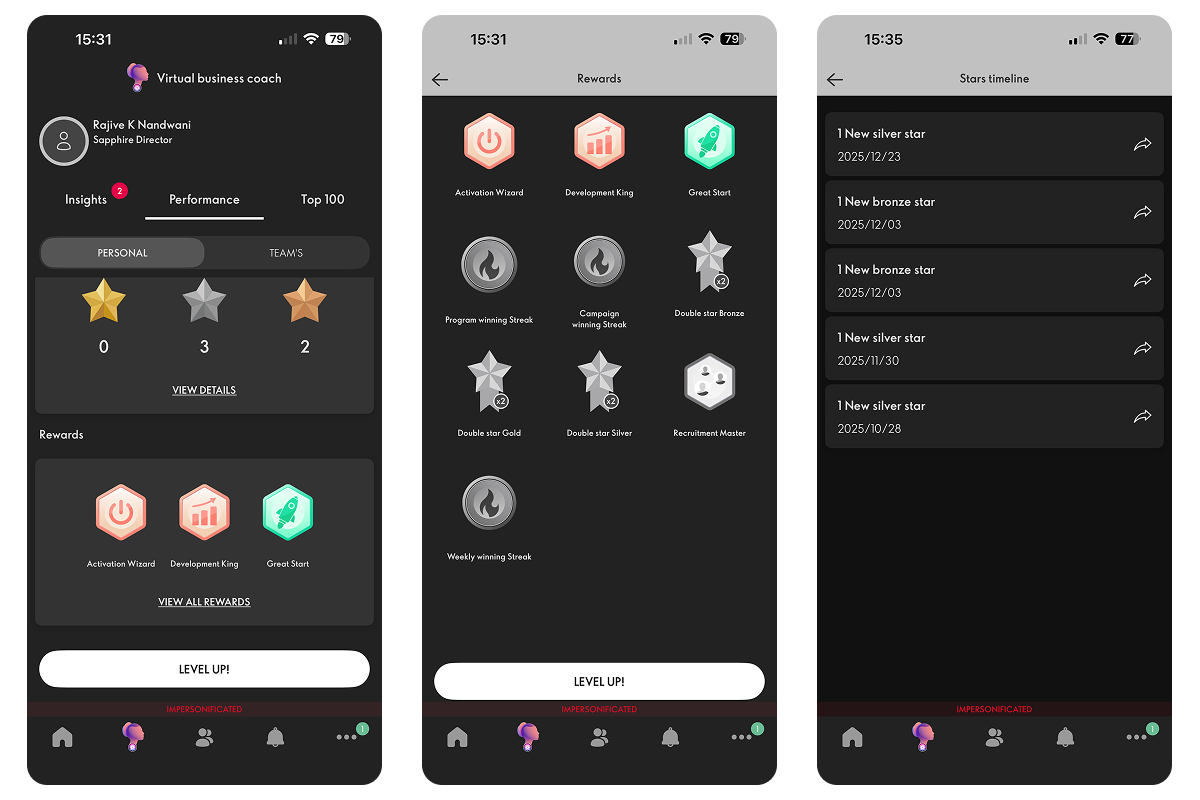
From fragmented logic to a unified performance system
Previously, performance tracking relied on scattered rules and disconnected metrics, making the system difficult to understand and manage.
The redesign introduces a structured model that unifies goals, progress tracking, and rewards into a coherent system.
By aligning business logic with a clear user-facing structure, the experience becomes easier to navigate, more predictable, and scalable over time.
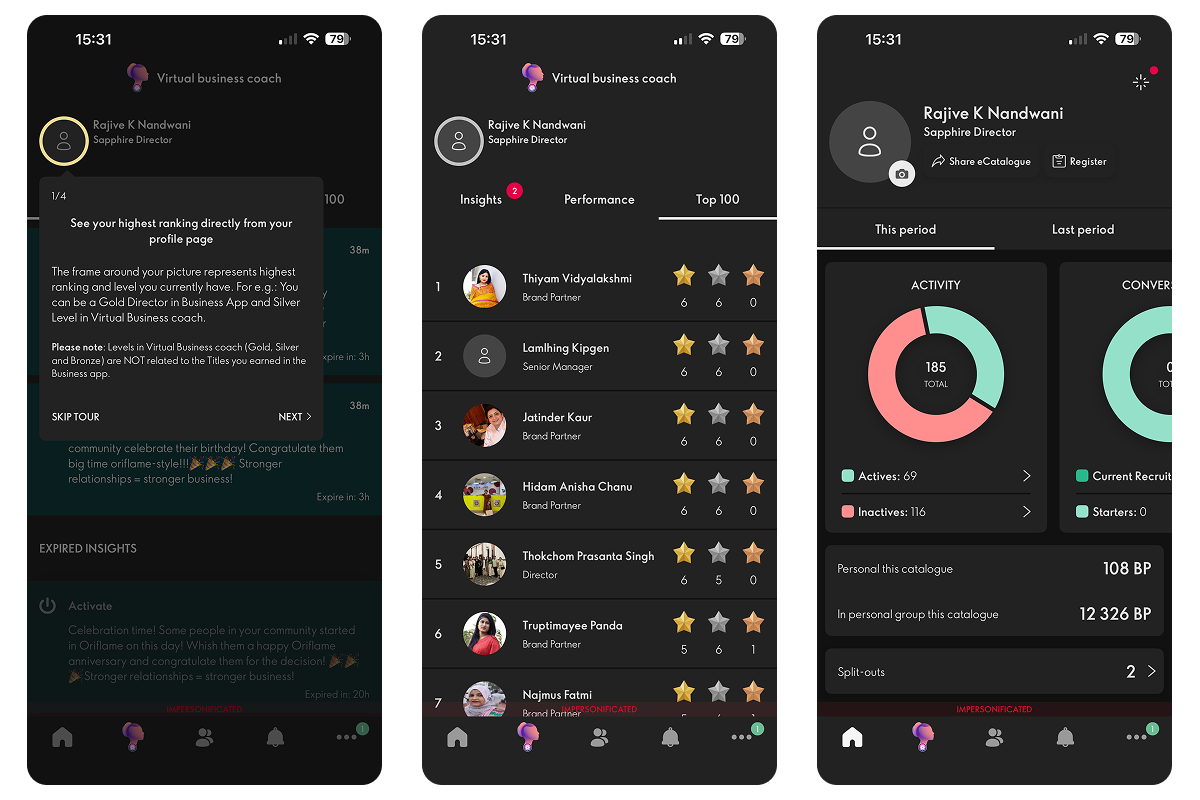
Introducing a clearer structure for targets, progress, and guidance changed how users approached the product. Weekly engagement increased (≈25–30%), as users began interacting with the system more regularly and with clearer intent.
Breaking down goals into more understandable parts led to more consistent follow-through on key activities like recruitment and activation, with noticeable improvements in goal completion rates. The experience also reduced confusion around performance expectations, creating a more shared understanding across users and teams.
Overall, the product shifted from something users checked occasionally to something they actively used to guide their day-to-day actions.
